
Is play therapy right for my child?

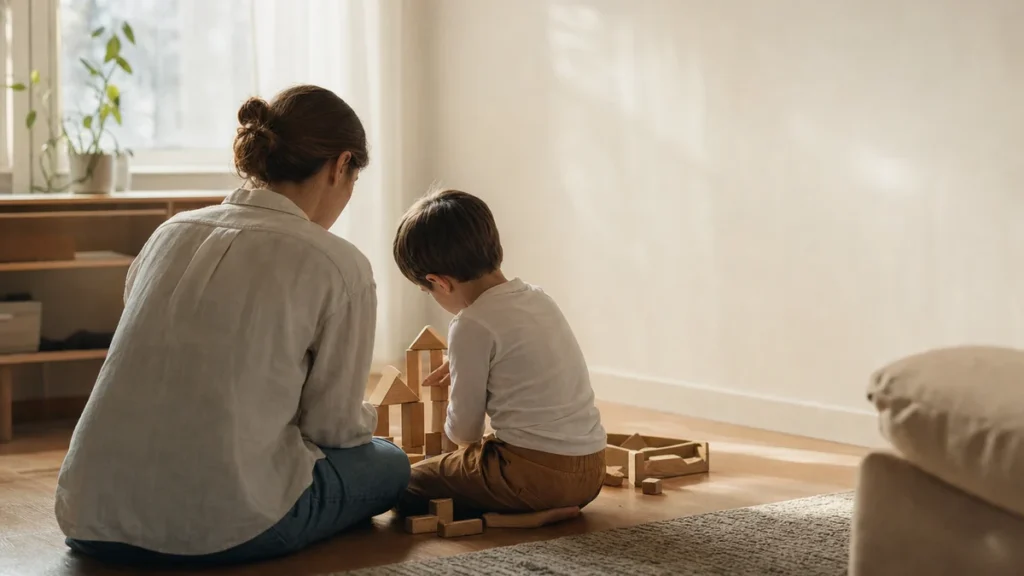
- How do I know if play therapy is a good fit for my school-age child?
- What is play therapy?
- Which kids is play therapy usually a good fit for?
- What signs suggest it’s time to get your child some support?
- How can you tell a hard phase from something that needs help?
- Would play therapy, family counseling or something else fit better?
- What actually happens in a play therapy session?
- How involved will you be as a parent?
- How do you explain play therapy to your child?
- How long does play therapy usually take?
- Can play therapy help after a divorce, a loss or a big move?
- What does play therapy cost, and does insurance help?
- How do you get started with play therapy?
- What’s different for families in Texas?
- A worked example: one made-up family deciding on play therapy
- Frequently asked questions
- Key takeaways
- More in this section
- Sources
The short version
- Play therapy is usually for kids about 5 to 12, and toys and art take the place of words.
- It fits best when feelings or behavior have lasted for weeks and get in the way at home, school or with friends.
- Divorce, a loss, a move or a hard stretch at school are common reasons families start.
- If the struggle is mostly between parent and child or across the family, family counseling may fit better or work alongside it.
For parents in Texas with a child between about 5 and 12 who seems stuck, stressed or not quite themselves, and who want to know whether play therapy is the right kind of help.
How do I know if play therapy is a good fit for my school-age child?
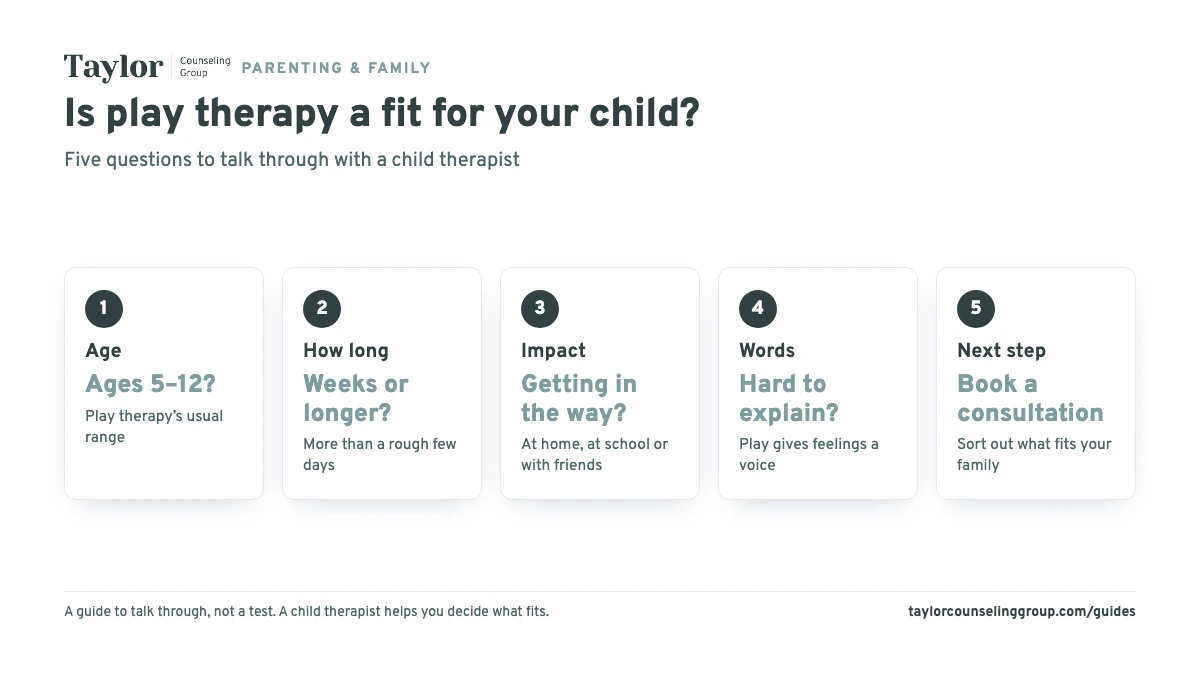
Play therapy is often a good fit for children about 5 to 12 whose feelings or behavior have been off for weeks, are causing real stress at home, or are getting in the way at school or with friends, especially when they can’t put what’s wrong into words. It can also help kids working through big changes like a divorce, a death in the family or a move. Whether it’s right for your child depends on their age, what’s going on and how much of the problem lives in the wider family, so a consultation with a child therapist is the clearest way to decide.
If you’re weighing it up, our play therapy for children is built for kids about 5 to 12, with child therapists at our locations around Texas. When the whole household is feeling the strain, family counseling brings everyone into the work, from parenting skills to bigger family conflicts. For more questions like this one, browse our Parenting & Family guides.
What is play therapy?
Play therapy is counseling for kids, done in the language kids already speak: play. A seven-year-old usually can’t sit on a couch and explain why bedtime feels scary since the move, or why they keep hitting their little brother. Give them a dollhouse, a sand tray or a box of markers, though, and the story starts showing up.
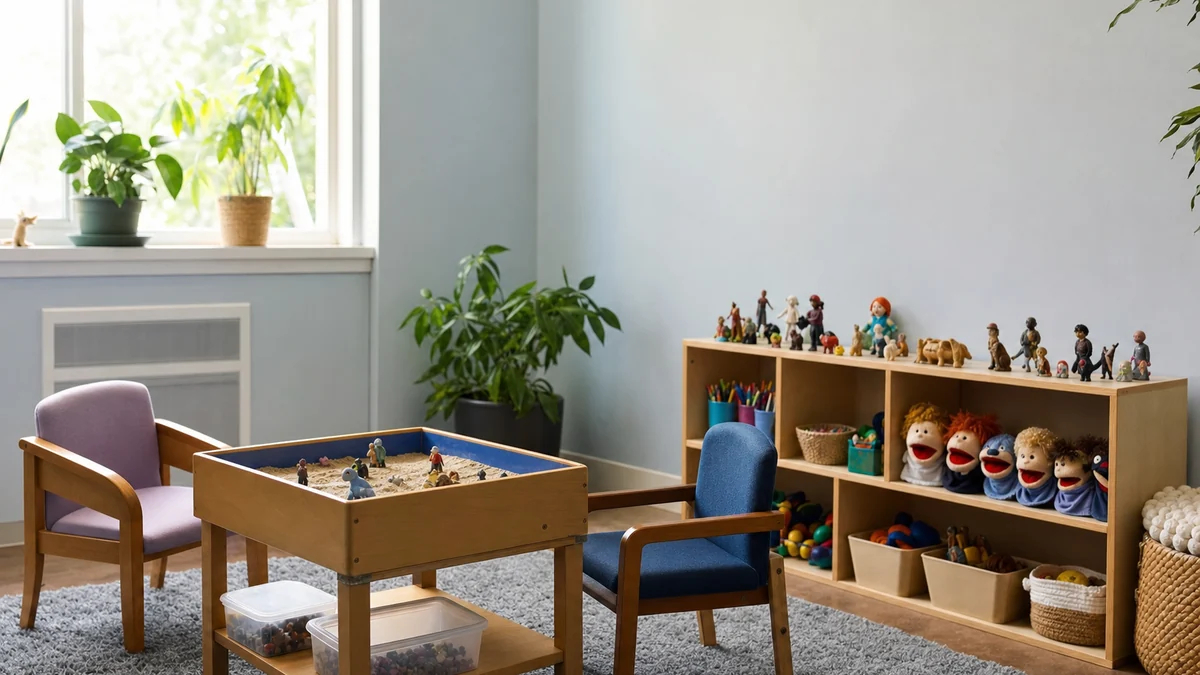
In play therapy, toys work like words and play works like sentences. A trained therapist watches what your child builds, acts out and returns to, then gently helps them name feelings, try new ways of coping and practice them until they stick. Our play therapy can include play, sand tray work and expressive arts, and it can be the main support for your child or one piece of a bigger plan.
Which kids is play therapy usually a good fit for?
Play therapy is typically for children 5 to 12. That’s the stretch where kids have big inner lives but not always the words to match. It tends to suit:
- Kids going through a big change. Divorce or separation, a death in the family, a move, a hospital stay, a long illness, or a lot of stress at school.
- Kids whose behavior is doing the talking. Meltdowns, defiance or aggression that seems bigger than the situation. Children often act out when they don’t know how else to cope.
- Kids who keep worries or sadness inside. The quiet child who’s pulled back or lost their spark.
- Kids who struggle socially. Trouble making friends or handling conflict on the playground.
- Kids with developmental differences. Play therapy can support children on the autism spectrum and kids with sensory differences as they learn to express themselves and connect.
You don’t need a label first. A formal diagnosis isn’t needed to begin therapy.
What signs suggest it’s time to get your child some support?
Every kid has rough days and the occasional rough season. It’s worth considering help when your child’s behavior or emotions last for weeks or longer, cause distress for your child or your family, or get in the way of how they’re doing at school, at home or with friends.
For younger children, signs worth noticing include:
- Frequent tantrums, or being irritable much of the time
- Often seeming fearful or worried
- Frequent stomachaches or headaches with no known medical cause
- Sleeping too much or too little, or frequent nightmares
- Not wanting to play with other kids, or having a hard time making friends
- Struggling at school, or a recent drop in grades
One sign on its own isn’t a reason to panic. A pattern that hangs around or keeps growing is a good reason to talk to someone. Ask your child’s teacher how things look in class and at recess, then bring what you hear to your pediatrician or a child therapist.
How can you tell a hard phase from something that needs help?
All kids are sad, anxious, irritable or wiggly sometimes, and most of it really is a normal part of growing up. A few questions help you sort it out:
- Is it easing or growing? Kids often bounce back as they settle in. Worry, anger or withdrawal that keeps building deserves attention.
- Does it fit the situation? Big feelings after a divorce or a loss are expected. Feelings that seem stuck, or show up out of nowhere, deserve a closer look.
- What’s your gut saying? If you’ve thought “this isn’t like them” more than once, that counts.
You don’t have to be certain before you reach out. A consultation is a low-pressure way to get a child therapist’s read, and sometimes it ends with “this is a normal phase, and here’s how to support it at home.” That’s a good outcome too. For the wider family view, our blog covers When to Seek Family Counseling.
Would play therapy, family counseling or something else fit better?
It depends on what’s going on, and where. These are the factors a therapist weighs with you:
- Your child’s age and verbal skills. Play therapy is typically for ages 5 to 12. Older kids who like to talk things through often do well in regular counseling, though some still prefer play when talking feels like too much.
- Where the struggle lives. If the hard moments mostly happen between you and your child, Parent-Child Interaction Therapy (PCIT), a family counseling approach that focuses on the parent-child relationship and healthy interactions, may help.
- How much of the family is involved. Family therapy can include the whole family or a few willing members. If you’re combining households, see What a Blended Family Is and When Counseling Helps.
- What’s happening for the adults. Kids feel the weather in the house. If you’re running on empty, read How to Tell if Stress Is Affecting Your Daily Life. If tension with your partner is part of it, Couples Counseling can be a gift to your kids too.
These aren’t either-or choices. Many families pair a child’s play therapy with a few parent sessions or some family work, and a child therapist can help you sort out what fits right now.
Get matched with a therapist
Easily schedule your appointment online at one of our locations in Central Texas.
What actually happens in a play therapy session?
Your child works one-on-one with their therapist in a playroom set up to feel safe, with clear boundaries. It’s stocked with things like figures, puppets, art supplies, building toys and often a sand tray.
Early sessions are about trust. The therapist follows your child’s lead and gets to know how they play. Over time, patterns show up: the toy family that keeps getting split in two, the superhero who always loses. Those themes give the therapist a window into what your child is carrying.
Then the work gets more active. The therapist may spot a self-critical thought behind a behavior, like “I always mess up,” and use play to replace it with a kinder, more accurate one. They might use puppets to act out a playground conflict two ways, so your child can see and practice a better way to handle it. Kids rehearse these skills until they show up at home and school.
To your child, it mostly feels like a fun hour with a grown-up who really gets them. That’s the point.
How involved will you be as a parent?
More than you might think. Your child has the playroom to themselves, but you’re a big part of the work around it.
- At the start, you share the backstory: what you’ve noticed, when it started and what you’ve tried.
- Along the way, the therapist checks in with you about themes and progress, and works with you on a personalized treatment plan with clear goals.
- At home, you may get ideas to try, like a calmer bedtime routine, words for naming feelings, or a few minutes of one-on-one play each day.
This matters. The Association for Play Therapy reports that meta-analytic reviews of over 100 play therapy outcome studies found moderate to high positive effects, and that the effects were greatest when a parent was actively involved in the child’s treatment.
How do you explain play therapy to your child?
Keep it simple, warm and true. Kids take their cue from you, so if you’re calm about it, they usually are too.
- Name it as help, not punishment. “You’ve had a lot of big feelings since we moved. There’s a grown-up whose job is helping kids with big feelings, and they do it by playing.”
- Describe what they’ll see. “There’s a room with toys, art stuff and a sandbox. You get to choose what to play with.”
- Keep it low-stakes. “You don’t have to talk about anything you don’t want to.”
- Answer questions plainly. If they ask, “Am I in trouble?” the answer is a clear no.
Skip “if you’re good” deals. They can make therapy sound like a test.
How long does play therapy usually take?
Typically, children do play therapy for two to twelve months, depending on how complex or severe the concerns are. Research suggests it takes an average of 20 sessions to resolve the problems of a typical child referred for play therapy, with some kids improving faster and more serious or ongoing problems taking longer.
Your child’s therapist keeps checking progress and adjusts the plan and timeline as needed. How long the struggle has gone on, whether something hard is still happening, and how much new skills get practiced at home all shape the pace.
Good questions to ask: How will we track progress? What changes should we look for first? How will we know when it’s time to wrap up?
Can play therapy help after a divorce, a loss or a big move?
Yes, and these are some of the most common reasons families come in. Big changes shake up a child’s sense of what’s safe and predictable, and kids rarely have the words for it.
A child going through their parents’ divorce may feel a confusing mix of sadness, anger, uncertainty, fear and guilt. A play therapist gives them a safe, neutral place to work through those feelings. With somewhere to put those feelings, many kids are less likely to bottle them up and act out, and they can build coping skills and resilience for the next challenge. The same goes for grief, a move or a hard hospital stay.
Watch your own load too. If you’ve been feeling low for a while, read How Counseling Can Help with Depression. Taking care of yourself is part of taking care of them.
What does play therapy cost, and does insurance help?
You have three ways to pay with us.
- Insurance. We’re in-network with most major insurance plans. With a plan we accept, your out-of-pocket cost is typically a copay or co-insurance once your deductible is met. Our support staff will check your benefits for you. A benefits check isn’t a promise of payment, so you’re responsible for the full cost of sessions if your plan doesn’t pay. See insurance and payment for details.
- Private pay. Our standard private rate is $130 per session.
- Affordable Care Program. Our income-based program offers sessions with Counselor Associates from $50 per hour session and with Practicum Students from $30 per hour session, all under a Board Approved Professional Supervisor. This program doesn’t use insurance.
How do you get started with play therapy?
- Get matched. Fill out the Get Matched form and choose “For My Child (under 18).” You can also find a location near you.
- Ask for a consultation if you’d like one. You can schedule a consultation for your child before scheduling an appointment, and talk through whether play therapy, family counseling or both make sense.
- Complete the paperwork. Intake forms are completed online at least 24 hours before the first appointment, including a Consent for Treatment of a Minor form.
- Get to know each other. The first session is mostly about the therapist getting to know you and your child and giving you space to talk.
Fit matters for kids, just like for adults. If the first therapist isn’t the right match after a few sessions, our team will help you move to another provider in our group.
Find a location near you
We provide affordable, reliable, and accessible care across Central Texas. Find a location near you.
What’s different for families in Texas?
Texas requires custody documents or a current court order that shows you can consent to your child’s treatment, so if you’re divorced, separated or a guardian, pull those papers together early. We serve clients from age five through late adulthood at ten locations in Texas, so the same practice can see your child in play therapy and support you or the whole family alongside it.
A worked example: one made-up family deciding on play therapy
Here’s an illustration with a made-up family, not a real client. Sam is 7. Since his parents separated in the spring, he’s had meltdowns most school mornings, sleeps with the light on, and his teacher says he’s been pushing kids at recess. It’s been about two months, and when his mom asks what’s wrong, he says “nothing.”
Look at the factors above: Sam is in the usual age range, it’s lasted weeks, it shows up at home, school and with friends, and he can’t put it into words. Those factors point toward play therapy, and a few parent sessions could help both adults handle mornings and handoffs the same way, but a child therapist is the one to confirm what fits. His mom schedules a consultation and tells Sam he’s going to a place where kids play and sort out big feelings.
Frequently asked questions
Isn’t play therapy just paying someone to play with my kid?
It looks like play, but the therapist is trained to read what your child’s play is saying and guide it toward naming feelings and practicing new ways to cope.
Can a preschooler or a young teen do play therapy?
Play therapy is typically for kids 5 to 12. Older kids can still benefit, especially when talking feels overwhelming, and a child therapist can suggest the best approach for a child just outside that range.
Does my child need a diagnosis before starting?
No. A formal diagnosis isn’t needed to begin therapy. Many families start because something feels off and they want a professional view.
Will the therapist tell me everything my child says?
Ask about this at the start. Therapists usually share themes, progress and what you can do at home, while giving your child enough privacy to feel safe opening up in the playroom.
What if my child refuses to go?
Keep it light, describe the playroom, and let them know they don’t have to talk about anything they don’t want to. Most kids warm up once they see the toys.
Do both parents need to agree to play therapy?
A parent with authority to consent completes the Consent for Treatment of a Minor form, and Texas requires custody documents or a current court order showing that authority. Having both parents on board also keeps things consistent at home.
Key takeaways
- Play therapy is typically for children 5 to 12 and uses toys, art and sand tray work in place of words.
- Consider support when feelings or behavior last for weeks and get in the way at home, school or with friends.
- Divorce, loss and big moves are common reasons kids start, and no diagnosis is needed first.
- Parents stay involved, and family counseling or PCIT can fit alongside or instead.
- Children typically do play therapy for two to twelve months; a consultation is an easy first step.
Getting the help you need shouldn't be complicated
So we make scheduling an appointment easy with our online booking tool.
More in this section
Sources
- Children and Mental Health: Is This Just a Stage? — National Institute of Mental Health
- Play Therapy Makes a Difference — Association for Play Therapy
- What is Play Therapy? — Center for Play Therapy, University of North Texas
- Finding Mental Health Care for Your Child — HealthyChildren.org (American Academy of Pediatrics)

Dr. Christopher Taylor
Christopher S. Taylor, Ph.D., is the founder of Taylor Counseling Group, an existential psychotherapist and the author of You Are Here. A Board-Approved LPC Supervisor, he was appointed by Governor Greg Abbott to the Texas State Board of Examiners of Professional Counselors, where he was later elected Vice Chair.
This guide is general information from Taylor Counseling Group. It is not medical advice, a diagnosis or a substitute for care from a licensed mental health professional, and reading it does not create a counseling relationship. If you are in danger or need help right away, call 911 or go to the nearest emergency room.